Choosing the Right Plastic for Digital Printing (Toner, Indigo, Inkjet)
Substrate selection for commercial printers running toner, HP Indigo, UV inkjet, and solvent inkjet
May 8, 2026 · K&R Plastics Substrate Team · 8 min read
Quick answer
The right plastic for digital printing depends on the press: toner/laser and HP Indigo need surface-treated or topcoated stock for adhesion, while UV and solvent inkjet bond to a wider range. PVC, PETG, styrene, polyester, and synthetic paper all run digitally when matched to the press and treatment. Confirm treatment and run an adhesion test before a production run.
Most printing today is digital. Toner, HP Indigo, UV inkjet, and solvent inkjet now run jobs that used to belong to offset and screen — and the substrate that worked on a Heidelberg twenty years ago does not necessarily work on a current-generation Indigo. Substrate selection has gotten harder, not easier, because each digital process has its own surface chemistry, heat profile, and adhesion physics.
This guide covers the substrate decisions that actually matter for digital printing: which plastic works on which press, when surface treatment is required, what gauges are practical, and where shops most commonly get burned.
The four digital print methods, briefly
Before substrate, the press matters. Each method puts ink (or toner) on the sheet differently, and that drives substrate compatibility.
Toner / laser uses heat-fused dry toner. The fuser temperature is typically 350–400°F. Substrates have to survive that heat without warping, gassing, or laminating to the fuser roller. Heat-stable plastics — PETG, treated PVC, polyester (Mylar), polypropylene — work; heat-sensitive plastics (untreated PE, low-gauge styrene) do not.
HP Indigo uses a liquid electrophotographic process — ElectroInk transferred through a heated blanket. Indigo runs cooler than toner but is more demanding on surface energy. Substrates need either a primer coating (Sapphire) or a corona/topcoat treatment qualified for ElectroInk. Generic "treated" is not the same as Indigo-qualified.
UV inkjet sprays UV-curable ink that crosslinks under a UV lamp. The ink doesn't need to absorb into the substrate — it cures on top. This makes UV inkjet the most substrate-tolerant of the digital processes. Most rigid plastics print well; treatment improves adhesion but is rarely a hard requirement.
Solvent / eco-solvent inkjet sprays solvent-based ink that bites into the substrate's surface. Compatibility depends on the substrate's chemical compatibility with the solvent. Vinyl, polyester, and treated polyolefins all work; clear polycarbonate and PETG can show solvent attack at the print line if the ink is too aggressive.
Substrate-by-substrate compatibility
Rigid Vinyl (PVC)
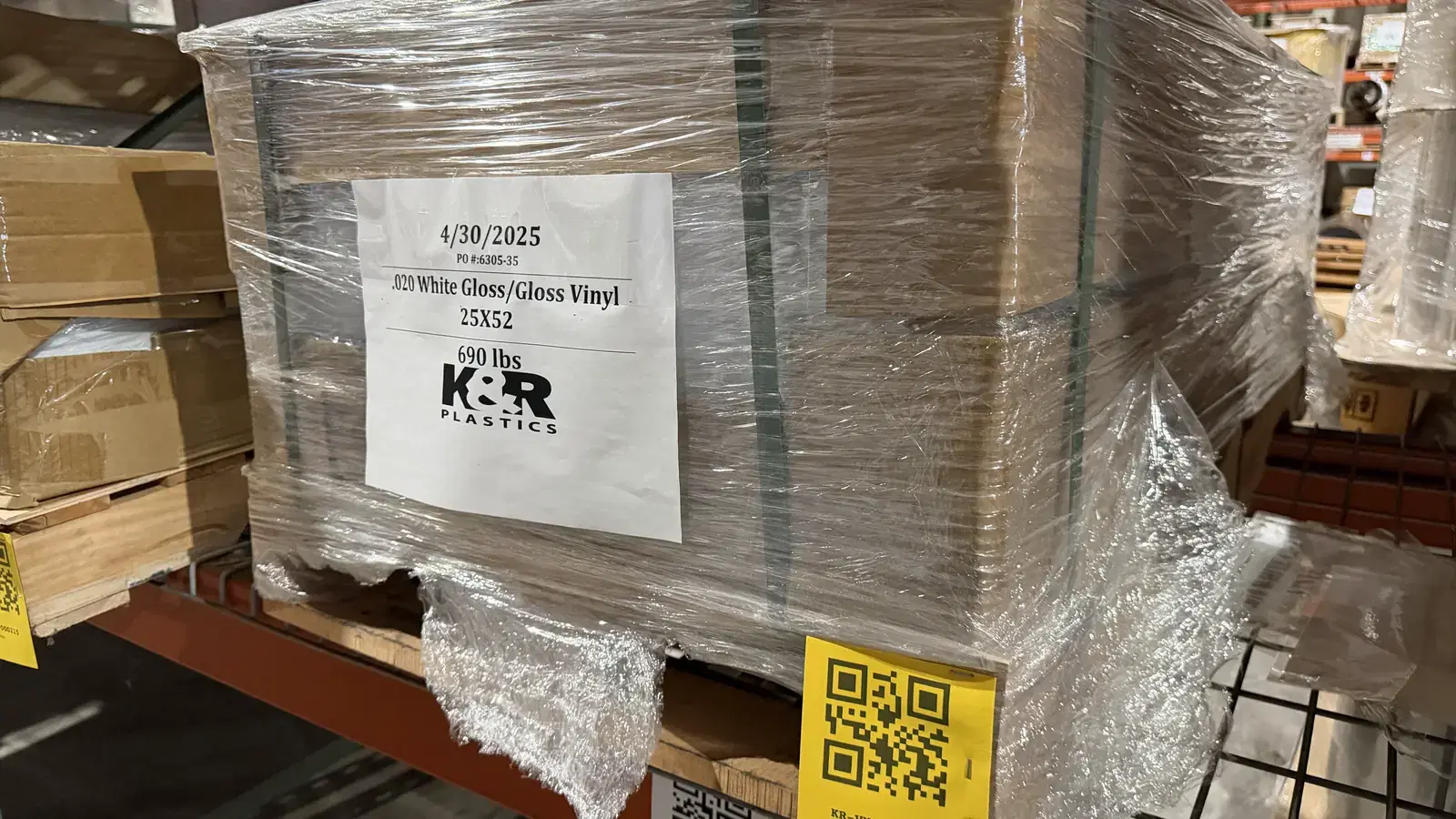
Print-grade rigid vinyl is the workhorse of commercial digital printing. Matte side prints by toner, screen, and solvent inkjet without any treatment thanks to the natural roughness profile. Gloss side requires corona treatment — and corona-treated PVC is what most shops call out as their default for indigo and offset.
Use it for: POP signs, ID cards, presentation covers, backlit display sheet, packaging mock-ups, the long tail of commercial print jobs.
Watch out for: Toner can scuff PVC if the fuser is running hot and the gauge is light (under .010"). Stick to .010" minimum for toner runs unless the press operator has dialed in a low-temp profile.
Rigid Vinyl substrate page → · Download datasheet ↓
Styrene (HIPS)
High-impact polystyrene is the budget POP standard. It runs cleanly on screen and offset, takes toner with a treated surface, and prints reasonably on UV inkjet. Indigo is borderline — possible on treated grades but not a safe default.
Use it for: Shelf talkers, wobblers, table tents, temporary IDs, packaging trays — anything where unit cost matters more than premium feel.
Watch out for: Static. HIPS picks up static charge in dry pressrooms and feeds erratically. Use ionizing bars or run in higher humidity. Also: HIPS yellows under UV, so it's not for outdoor use beyond a few weeks.
Styrene (HIPS) page → · Download datasheet ↓
Polycarbonate
Polycarbonate is the substrate you reach for when impact, heat, or clarity exceed what PVC and PETG deliver. Print-grade PC takes toner well and runs clean on UV inkjet. Indigo on PC requires a treated grade — qualify with samples before committing to a run.
Use it for: Membrane switches, instrument panel overlays, faceshields with printed graphics, backlit displays where heat matters.
Watch out for: PC is more expensive — typically 2–3× rigid vinyl per square foot. Use it where you need it; don't default to it.
Polycarbonate page → · Download datasheet ↓
Polyester (Mylar / PET)
Polyester film (Mylar) is the answer in thin gauges (1–14 mil) where rigid sheet won't fit. Treated polyester takes toner, indigo, and UV inkjet well. Untreated polyester is for laminating, not direct printing.
Use it for: Graphic overlays, durable labels, membrane switch face film, hot-stamping carriers.
Watch out for: Polyester is dimensionally stable but thermally tight — heat from a toner fuser can shrink it slightly across the press direction. Pre-condition the stock at room temperature for 24 hours before the run.
Polyester (Mylar) page → · Download datasheet ↓
PETG
PETG is the modern default for premium digital printing on rigid plastic. It runs on every digital process — toner, indigo, UV inkjet, solvent — without surface treatment in most cases. Clarity is excellent, impact is high, and it thermoforms cleanly when the printed sheet needs to be shaped.
Use it for: Premium retail displays, faceshields with printed branding, packaging clamshells, sneeze guards, anywhere clarity and printability both matter.
Watch out for: Solvent inkjet can attack PETG if the ink is aggressive — test before committing to a long run.
PETG page → · Download datasheet ↓
APET / RPET
APET and RPET print like PETG but run cheaper. RPET grades carry post-consumer recycled content for sustainability-driven programs. Both run cleanly on toner, indigo, UV inkjet, screen, and offset.
Use it for: Thermoformed packaging, clear lids, blister packs, retail packaging where recycled content matters.
Watch out for: APET is less impact-resistant and harder to thermoform deep than PETG. If your job needs a deep draw or impact-rated finish, step up to PETG.
APET / RPET page → · Download datasheet ↓
Polypropylene (corona-treated)
Treated polypropylene prints surprisingly well across all digital processes. It's the right pick when you need live-hinge fatigue resistance — binders, folders, presentation pieces that fold and stand up — or when chemical resistance matters.
Use it for: Binders, folders, presentation covers, live-hinge enclosures, food-contact packaging.
Watch out for: Corona treatment fades. Print within 30 days of treatment date; if the stock has been sitting longer, request fresh treatment or expect adhesion issues.
Polypropylene page → · Download datasheet ↓
Synthetic Paper
Synthetic paper bridges plastic and paper — it prints, folds, and finishes like coated paper but resists water and tearing. Runs on every digital process.
Use it for: Restaurant menus, outdoor maps, durable hang tags, instruction manuals for outdoor equipment, ballots.
Watch out for: Heavier than premium coated papers per square inch — factor postage and freight if mailing in volume.
Synthetic Paper page → · Download datasheet ↓
Compatibility quick-reference
The full matrix lives at Print Method Compatibility. The condensed version:
| Substrate | Toner | Indigo | UV Inkjet | Solvent | Screen | Offset |
|---|---|---|---|---|---|---|
| Rigid Vinyl (PVC) | ✓ | ✓ (treated) | ✓ | ✓ | ✓ | ✓ (treated) |
| Styrene (HIPS) | ✓ | ✓ (treated) | ✓ | ✓ | ✓ | ✓ |
| Polycarbonate | ✓ | ✓ (treated) | ✓ | ✓ | ✓ | ✓ |
| Polyester (Mylar) | ✓ (treated) | ✓ (treated) | ✓ (treated) | ✓ | ✓ | ✓ (treated) |
| PETG | ✓ | ✓ | ✓ | ✓ | ✓ | ✓ |
| APET / RPET | ✓ | ✓ | ✓ | ✓ | ✓ | ✓ |
| Polypropylene | ✓ (treated) | ✓ (treated) | ✓ (treated) | ✓ (treated) | ✓ (treated) | ✓ (treated) |
| Synthetic Paper | ✓ | ✓ | ✓ | ✓ | ✓ | ✓ |
What to ask before you buy
Three questions to ask any substrate vendor — including K&R — before you commit to a digital print run:
- Is this grade qualified for [my specific press]? "Treated" is generic. "ElectroInk-qualified for HP Indigo Series 4" is specific. Get the specific answer.
- What's the corona / treatment date? Treatment fades. If the stock was treated more than 30 days ago, you'll see adhesion problems. Fresh treatment or reject.
- Will you ship a sample I can run on press first? Anyone serious will say yes. K&R ships samples on stock items same-day on most requests.
Common substrate problems on press (and how to fix them)
Toner flaking off after fusing. Cause: fuser too cool, or substrate too cold. Fix: pre-condition stock to 70°F for 24 hr before the run; check fuser calibration.
Indigo ink adhesion failing tape test. Cause: stock isn't qualified for ElectroInk. Fix: switch to a Sapphire-qualified or factory-treated grade. Generic corona treatment doesn't pass Indigo's tape test reliably.
UV inkjet beading on the sheet. Cause: surface energy too low, ink too thin, or substrate has release residue (mold-release film, masking). Fix: confirm masking is removed, check substrate dyne level, increase UV cure power.
Solvent inkjet attacking the substrate. Cause: aggressive ink, sensitive substrate (PETG, PC). Fix: switch to eco-solvent or UV inkjet, or change substrate to vinyl/polyester.
Sheets curling after print. Cause: moisture differential between sides, common on toner-printed plastics. Fix: print both sides, or store flat under weight for 24 hr post-print.
When to ask for help
Substrate selection becomes harder when:
- You're running mixed jobs across multiple presses on the same substrate
- The print needs to thermoform after printing
- The end-use environment is harsh (outdoor, chemical, high-temp)
- You're qualifying a new vendor or new substrate at production volume
- The cost of a failed run is high enough to justify front-loading the qualification work
In any of those cases, talk to a substrate specialist before you order. The right substrate selection decision in the front end can save weeks of press downtime and rework on the back end.
Need help selecting a substrate for your press? Try our Substrate Selection Guide — answer four questions and we'll surface a shortlist matched to your application. Or request samples on stock items for press qualification.